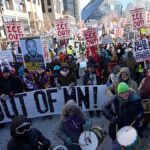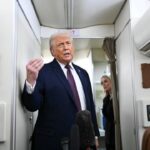


For many people, 2025 can be described in one word: tumultuous.
Some countries have been hit by airstrikes, others by trade tariffs. It was a year of wars and ceasefires, political turmoil and popular protests.
In 2025, the Israel-Hamas war in Gaza ended with a U.S.-brokered ceasefire that proved unstable, while Russia’s war in Ukraine continues to rage into its fourth year.
It was also a year in which Europe questioned its relationship with the United States and reassessed its approach to security after the White House appeared to shift its commitment to the NATO military alliance.
It was a tough decision to pick just 10 (or so) events in a year where almost every event seems shocking, but here are our picks.
1. Trump and the White House’s stunning comeback
On January 20, Donald Trump returned to the White House after a spectacular political comeback. The 79-year-old defeated Democratic rival Kamala Harris, who had been forced into the race after former President Joe Biden formally withdrew from the race in July 2024.
Questions abounded for weeks about Biden’s age and ability to govern, and he ultimately abandoned his re-election bid before he was formally nominated by the Democratic National Convention.
Some argue that the decision stalled the campaign even before it began because Harris didn’t have enough time to develop a cohesive strategy.
What is certain is that President Trump’s overwhelming victory in the polls has opened the door to the White House for a second term.
Trump has come back stronger, buoyed by a growing base of supporters that includes Big Tech billionaires, young voters and Latinos.
Trump, who signed 142 executive orders in his first 100 days in office, more than any other president in U.S. history, and signed some 225 executive orders by the end of 2025, not only put America first, but also sought to reshape the world order.
The order focused on national security, immigration restrictions, energy independence, and government efficiency, and sought to reverse previous policies.
The administration also took a tougher stance on the European Union, describing it as in decline, “drenched in illegal immigration, over-regulated and green-obsessed.” This is an unprecedented criticism of a traditional ally that calls into question the future of transatlantic relations.
2. Break-up shakes uneasy U.S.-Ukraine alliance
Just over a month after taking office, President Trump has made it clear that U.S. military aid to Ukraine cannot be taken for granted.
That was the message sent to the world during a heated meeting between Ukrainian President Volodymyr Zelensky and President Trump at the White House on February 28, which included a shouting match and support from Vice President J.D. Vance, who insisted that President Trump “should say thank you” to President Zelensky.
In one of the most jarring moments of the exchange, Trump told Zelenskiy: “Your position is not good. You don’t have the cards right now. You’re betting on the lives of millions of people. You’re betting on World War III.”
Since President Trump returned to office, direct and indirect military and humanitarian assistance to Ukraine from Washington has been temporarily halted, restricted, suspended, or resumed, making the United States an unpredictable partner among countries supporting Kiev against a full-scale Moscow invasion.
Although President Trump announced in July that military aid had resumed, EU officials told Euronews that the EU’s position is that it cannot rely on the United States in the long term.
However, the two leaders have been meeting on more friendly terms since their initial breakdown. President Trump called their recent meeting at Mar-a-Lago in December “amazing” and asked President Zelenskiy if he enjoyed the meal.
Zelenskiy, meanwhile, appeared in a suit in response to Trump’s criticism that sparked the February spat.
Since then, the United States has been pushing for peace deals that provide Ukraine with 15 years of security, President Zelensky said in December, saying they were “90%” agreed.
The 28-point US-Russia peace plan has been revised since it was leaked in November, and while it was clear that it initially favored Russia and its extremist demands, Kiev is now hoping for more support from European leaders as 2026 begins with a series of talks, including top-level “coalition of the willing” talks in the first week.
3. President Trump and “Emancipation Day” tariffs
2025 will be remembered as a turning point year in global trade relations, with the United States raising tariffs on many parts of the world, all part of President Trump’s policy and what he described as an act of retaliation.
The unpredictability of tariffs appeared to act as a lever in some cases, creating an environment of fear and uncertainty about the future of global markets.
On April 2nd, President Trump imposed 10% tariffs on nearly every country in the world in a sweeping package he dubbed “Emancipation Day,” with additional country-specific tariffs scheduled to go into effect on April 9th.
However, after the announcement spooked global markets, President Trump suspended implementation of the second round of tariffs to open the door to negotiations.
By the end of July, the White House had signed agreements with eight trading partners, including the European Union, the United Kingdom, Japan, South Korea, Indonesia, the Philippines, and Vietnam.
The United States and China are currently observing a tariff “truce” after months of heightened tensions, with the United States and China threatening to impose tariffs of up to 145% and 125%, respectively.
The European Union (EU) reached a trade deal with the United States at the end of July, agreeing to impose a 15% tariff on European exports to the United States.
But the deal did not come without trade-offs, with Brussels pledging to buy U.S. weapons and energy in exchange for lower tariffs.
But this was not the last call from the United States to use tariffs as a tool of political influence. In November, U.S. officials asked the EU to ease digital restrictions on U.S. tech companies in exchange for lowering aluminum tariffs, currently set at 50%.
4. A new pope for the era of reconciliation
A new pope will be elected in 2025. American-born Robert Francisco Prevost, who goes by Pope Leo XIV, assumed the papacy in May after Pope Francis died in April at the age of 88.
The conference brought little drama, even though the new head of the Catholic Church was not touted as one of the leading candidates.
Despite having a very different background, Pope Leo XIV’s actions on social issues are generally seen as a continuation of Pope Francis’ actions, experts said.
The new supreme pope and bishop of Rome has advocated peace since taking office. In his first address, Pope Leo XIV encouraged the world to embrace “disarmament and disarmament peace” in the midst of major global conflicts.
“I carry in my heart the suffering of our beloved Ukrainian people. Let us do everything possible to achieve a true, just and lasting peace as soon as possible,” the president told the world, addressing the approximately 150,000 faithful gathered in St. Peter’s Square upon his election.
Following Ukraine, the Pope also spoke out against the Gaza Strip, calling for an immediate ceasefire, humanitarian relief for civilians, and the release of all hostages.
“But how many other conflicts are there in the world?” he asked.
5. US and EU lift sanctions on Syria
The fall of Syria’s longtime dictator Bashar al-Assad in a surprise rebel offensive in December 2024 effectively signaled the end of more than 13 years of brutal civil war that had killed more than 580,000 people and displaced 13 million Syrians.
The rebel attack was led by Ahmed al-Sharaa, a former Islamic extremist with ties to al-Qaeda.
Al-Sharah, who has given up his name Abu Mohammed al-Julani, is now on a mission to project himself as a capable politician who can rebuild the country by forging alliances with new international partners, including the European Union and the United States.
He became the first Syrian leader in 60 years to address the United Nations General Assembly and was received by President Trump at the White House.
His message was clear and consistent: lift all international sanctions against Syria to give Syria a chance to rebuild.
Those words have been effective to this day. In May, the EU lifted all economic sanctions against the country, and the US also temporarily lifted all sanctions, but the permanent lifting was only confirmed in December.
The UK followed suit, and in November The United Nations Security Council voted Lifting terrorism-related sanctions against Al Shara.
The EU and US justified their decision partly on the grounds that Syria deserves a chance to rebuild after more than a decade of war, but also on political grounds to ensure refugees have a safe place to return.
There are more than 1 million Syrian refugees and asylum seekers in Europe, the majority of whom live in Germany and Sweden.
Al Shara’s final move this year was to replace Syrian banknotes that featured portraits of the former ruling al-Assad dynasty with depictions of flowers, olives and mulberries.
6. Israel and the US attack Iranian nuclear facilities
While the Israel-Hamas war in Gaza continued through much of 2025, Israel attacked adversaries on other fronts, including Lebanon, Yemen, and Syria, all targeting groups such as Hezbollah and the Houthis, who are widely seen as powerful proxies of Tehran.
This culminated in Israeli attacks on Iran’s top military commanders, nuclear scientists, and key strategic targets in the 12-day conflict, with the United States also joining in attacks on Iran’s nuclear facilities with bombers and bunker-buster bombs.
A ceasefire brokered by the United States and Qatar was finally agreed to on June 24, with both sides claiming victory.
Israel and the United States have claimed that Iran’s missile and nuclear programs have been largely destroyed, a charge the Iranian government denies.
7. Putin’s unprecedented red carpet welcome in Alaska
They walked the red carpet and exchanged friendly handshakes and warm exchanges.
These were the first images of US President Donald Trump’s most controversial meeting with Russian President Vladimir Putin in Alaska in 2025.
Putin’s visit to the United States was seen as unprecedented after he was ostracized for his full-scale invasion of Ukraine in 2022, but is part of Trump’s renewed efforts to achieve peace and end the Russian war, which Trump is reportedly growing increasingly fed up with.
But despite the importance of the occasion, there was no concrete outcome from the meeting other than footage of Putin on U.S. soil being broadcast around the world.
After the meeting, President Trump expressed dissatisfaction with President Putin’s actions amid continued attacks on Ukraine.
At the U.N. General Assembly in September, Trump said Ukraine could regain all the territory it lost to Russia in nearly four years of war, a dramatic reversal of the position he took during a disastrous White House meeting with Zelensky in February.
About a month after the U.N. General Assembly speech, the U.S. Treasury Department announced in a statement that it had imposed sanctions on major Russian oil companies for “Russia’s failure to seriously engage in the peace process to end the war in Ukraine.”
However, the Alaska summit continued to cast a long shadow over the negotiations.
Russian officials repeatedly cited the “spirit and letter” of the Anchorage talks, and Foreign Minister Lavrov claimed to have established favorable conditions for the Russian side.
The Kremlin used President Trump’s warm welcome to Putin, which included red carpets, military flyovers and limousine rides, as evidence that Washington had accepted Russia’s territorial claims, alarming Kyiv and its European allies.
8. The ceasefire between Israel and Hamas in the Gaza Strip is unstable
After nearly two years of a devastating war in Gaza that began with a Hamas-led militant attack on southern Israel on October 7, 2023, the fragile ceasefire between Israel and Hamas entered into force gradually through 2025 through intensive mediation by the United States, Qatar, and Egypt.
The Trump-led 20-point plan went into effect on October 10th and was approved by the UN Security Council on November 17th.
Under the agreement, Hamas released the last 20 living Israeli hostages on October 13 in exchange for nearly 2,000 Palestinian prisoners and detainees.
Speaking at a peace summit attended by leaders of more than 20 countries in the Egyptian resort city of Sharm el-Sheikh, President Trump called it a “historic dawn” and called for the disarmament of Hamas, warning that “if you don’t disarm, we will disarm you.”
The agreement includes provisions for a U.S.-led international stabilization force, with Azerbaijan, Turkey, Indonesia and Egypt interested in joining.
The plan calls for Palestinian technocrats vetted by Israel to rule Gaza, but Hamas insists the Palestinians should decide their own leaders.
Significant questions remain about permanent rule, a complete Israeli withdrawal, a surge in violence related to Hamas’ attempts to maintain its grip on power, and the return of the remains of the one remaining hostage still held in Gaza.
At year’s end, the ceasefire remained fragile with sporadic clashes and accusations of violations by both sides, while the humanitarian crisis in Gaza continued, with most of the population still displaced amid mass destruction.
9. China and its rare earth exports
Global tensions rose again towards the end of the year after China imposed strict export controls on rare earth minerals, which are essential for making everything from cars to weapons.
The move also raised concerns about global supply chains.
China has a near monopoly on 17 element groups and said it has restricted exports to protect domestic processing and to respond to geopolitical pressure from U.S. tariffs.
These regulations were initially a response to Washington, but Brussels became collateral damage in the conflict and was forced to consider how to respond.
European Commission President Ursula von der Leyen said in a speech in October that the Union was ready to use all tools at its disposal to counter what some European leaders, including French President Emmanuel Macron, described as economic coercion from China.
The ACI, adopted in 2023, allows the EU to retaliate against third countries by imposing tariffs or restricting access to public procurement, licenses and intellectual property rights.
European Council President Antonio Costa met with Chinese Premier Li Qiang on the sidelines of the ASEAN Summit in Kuala Lumpur.
“We shared strong concerns about China’s expansion of export restrictions on critical raw materials, related products and technology,” Costa said after the meeting. “I called on him to restore a fluid, reliable and predictable supply chain as soon as possible.”
While Brussels insists on achieving a constructive solution without escalation, the European Commission is pursuing a “risk aversion” strategy to reduce dependence on Chinese minerals.
In addition, Germany and France signaled support for stronger trade measures If no comprehensive solution was found.
According to the International Energy Agency (IEA), China accounts for 60% of global production and 90% of refining capacity, making the world, including the EU, highly dependent on China.
In September, China held its largest-ever military parade for the first time, bringing together Xi Jinping, Putin, and Kim Jong Un, showcasing hypersonic missiles and AI-powered weapons, and highlighting China’s challenge to the Western-led world order.
The Chinese government has offered the EU an olive branch to build a “win-win” partnership and said it is open to European companies expanding into the Chinese market.
10. From heavy metal drummer to Japanese prime minister
Japan’s parliament on October 21 elected Sanae Takaichi as its first female prime minister, a historic milestone for Japan, which ranks 118th out of 148 countries in gender equality.
Takaichi received 237 votes in the House of Representatives, just four votes more than needed, after the Liberal Democratic Party formed a new coalition with the right-wing Nippon Ishin no Kai after years of collapsing with the centrist New Komeito Party.
Takaichi is a hard-line supporter of assassinated former Prime Minister Shinzo Abe, opposes same-sex marriage, supports male-only succession to the Imperial Throne, and takes a tough stance on national defense and China.
In late December, Japan’s cabinet approved a record defense budget for next year of more than 9 trillion yen (almost 50 billion euros), aimed at boosting counterattack capabilities with cruise missiles and unmanned weapons and coastal defenses amid rising regional tensions.
A record defense budget and expanding missile and drone programs marked a decisive change for Japan under Takaichi, paving the way for Japan to become the world’s third-largest military spender.
11. West Africa’s “coup belt” expands
Political instability continues to plague West Africa well into 2025, with a military regime taking over in Guinea-Bissau on November 23, the day before the election results were announced, and a coup attempt in Benin.
The coup extended a pattern of fire started in Mali in 2020 and 2021, Guinea in 2021, Burkina Faso in 2022, and Niger and Gabon in 2023, forming what observers call a “coup belt” across the Sahel region.
While systematically expelling French troops and European diplomatic missions, the junta has deepened ties with Russia, including lucrative contracts with Kremlin-run Wagner Group mercenaries (renamed Afrika Korps after Evgeny Prigozhin’s death).
(As this may sound familiar, the Afrika Korps was Nazi Germany’s expeditionary mission to the continent during World War II. Russia’s position in the 21st century has already faced serious allegations of war crimes.)
French influence in the former colony collapsed, forcing Paris to relocate military bases and abandon decades of postcolonial involvement.
At the same time, the Kremlin intervened, gaining access to strategic minerals, military bases, and political influence throughout the region.