

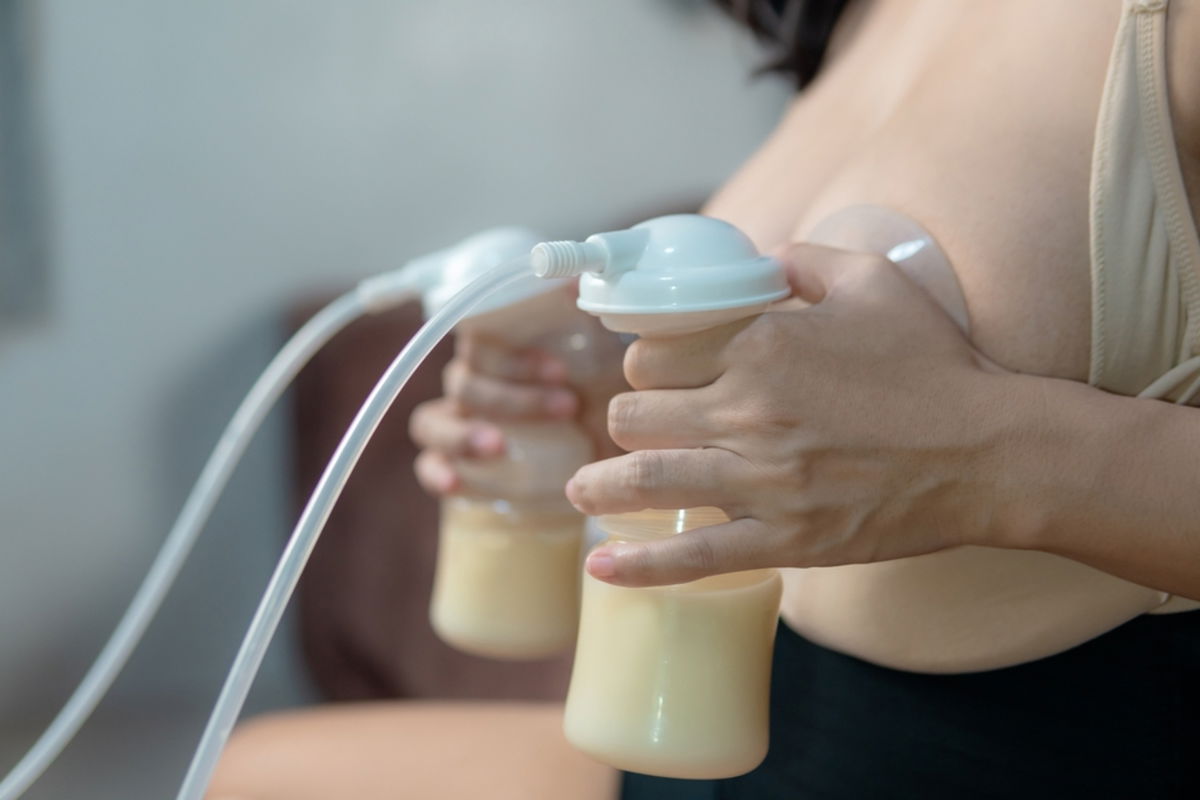
Double breast pump. Credit: releon8211, Shutterstock.
world milking day It was created to recognize that pumping is an essential and often invisible part of breastfeeding. The day aims to normalize breast pumping and recognize the physical, mental and time-consuming labor it entails, especially for parents who have returned to work.
Breastfeeding is a public health priority
The World Health Organization (WHO) states that breastfeeding is one of the most effective ways to ensure a child’s health and survival. It recommends exclusive breastfeeding for the first six months of life, followed by continued breastfeeding alongside complementary feeding for up to two years and beyond. WHO data shows that breastfeeding is associated with a lower incidence of infectious diseases in infants and a reduced risk of breast and ovarian cancer in mothers.
According to UNICEF, more than 700 million children around the world are breastfed, but the workforce required remains largely unrecognized. UNICEF points out that while breastfeeding directly contributes to improving national health and reducing healthcare costs, it is not reflected in standard economic indicators such as GDP.
unpaid breastfeeding labor
Research by Australian National University economics professor Julie P. Smith demonstrates that breastfeeding is effectively unpaid work that is systematically excluded from national economic accounts. In her peer-reviewed paper, “Milk Lost?” Dr. Smith’s paper, “Calculating the Economic Value of Human Milk in Gross Domestic Product,” published in the Journal of Human Lactation, shows that when assessing human milk production using standard replacement cost methods, its contribution is comparable to that of major agricultural products. Her analysis concludes that in high-income countries, the annual economic value of breastfeeding per child amounts to thousands of euros, taking into account the time it takes, the skills required, and the associated savings in health care costs, highlighting a major blind spot in the way economies measure productive work.
Donating breast milk saves lives
Human milk banks supported by the European Milk Bank Association report that donated breast milk is essential for premature and medically vulnerable infants. Clinical evidence cited by the association shows that donor milk significantly reduces the risk of necrotizing enterocolitis, a life-threatening intestinal disease in preterm infants.
One of the most documented cases of milk donation concerns Elizabeth Anderson Sierra, an American mother who was diagnosed with overfeeding syndrome (oversupply). According to Guinness World Records, she donated 1,599.68 liters (56,301.20 British fluid ounces) to milk banks between February 20, 2015 and June 20, 2018. That’s the equivalent of 2,253 Starbucks Venti lattes.
Lactation experts point out that oversupply can cause pain and complications, but regulated donations can turn personal challenges into life-saving assistance.
Pumping milk allows breastfeeding after returning to work
According to the International Labor Organization (ILO), workplace support is essential for continuing breastfeeding after maternity leave. The ILO’s Maternity Protection Convention No. 183 indicates that such considerations are also associated with an increase in the proportion of women who maintain employment while maintaining recommended breastfeeding practices.
Spanish legality regarding breastfeeding and pumping at work
In Spain, breastfeeding and pumping are protected as a worker’s right, rather than a discretionary benefit. According to the Spanish Ministry of Labor, Article 37.4 of the Labor Code grants employed parents one hour of paid breastfeeding leave per working day until the child reaches nine months of age.
This hour can be taken as one break, split into two 30-minute breaks, or stacked up as fully paid time off if allowed by the collective bargaining agreement. Importantly, the law applies equally to breastfeeding and pumping, meaning pumping is specifically covered.
breastfeeding leave
Spanish government allows breastfeeding leave (Breastfeeding permit) It is the personal right of either parent, not just the mother.
The Spanish Labor Inspectorate’s guidance makes clear that employers cannot reduce workers’ salaries, limit promotions, or penalize workers for taking breastfeeding leave. A Spanish court has ruled that refusing pump breaks constitutes sex discrimination.
Well done to everyone breastfeeding around the world, thank you!
Check out all the health and beauty news.