
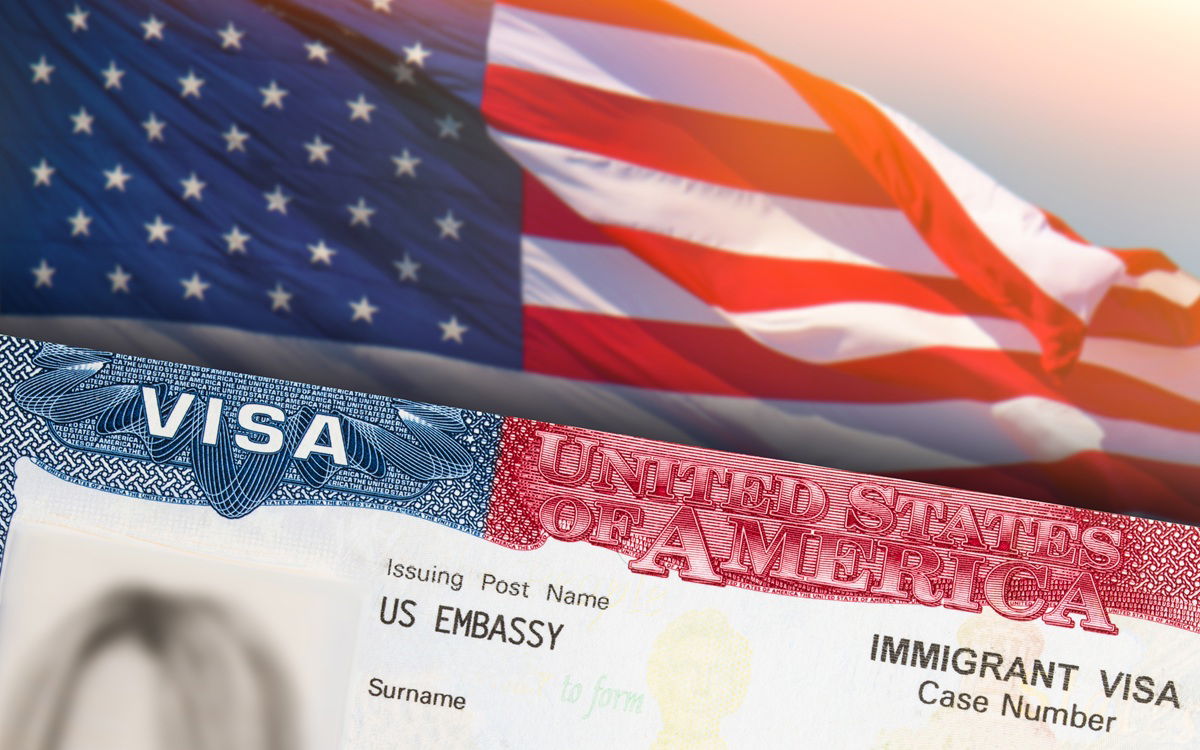
The United States has suspended immigrant visa processing for applicants from 75 countries under new measures announced by the Trump administration. Credit: Artiom Photo, Shutterstock
For thousands of people hoping to legally immigrate to the United States, the rules are suddenly about to change.
The Trump administration has confirmed it will suspend processing of immigrant visas for citizens of 75 countries, a move that will take effect on January 21 and signals a sharp escalation in Washington’s immigration crackdown.
This decision, confirmed by the U.S. Department of State, does not affect tourist or short-term visitor visas. But for people applying for permanent residence in the United States, whether to join a family, get a job or start a new life, the process was suddenly frozen.
And for many, there is no clear outlook on when it will reopen.
Who is affected by visa suspension?
The list is long and geographically extensive.
This includes Latin American countries such as Brazil, Colombia and Uruguay, parts of the Balkans such as Bosnia and Albania, South Asian countries such as Pakistan and Bangladesh, and dozens of countries in Africa, the Middle East and the Caribbean.
Countries affected by the suspension are Afghanistan, Albania, Algeria, Antigua and Barbuda, Armenia, Azerbaijan, Bahamas, Bangladesh, Barbados, Belarus, Belize, Bhutan, Bosnia and Herzegovina, Brazil, and Cambodia. , Cameroon, Cape Verde, Colombia, Democratic Republic of Congo, Cuba, Dominica, Egypt, Eritrea, Ethiopia, Fiji, Gambia, Georgia, Ghana, Grenada, Guatemala, Guinea, Haiti, Iran, Iraq, Ivory Coast, Jamaica, Jordan, Kazakhstan, Kosovo, Kuwait, Kyrgyzstan, Laos, Lebanon, Liberia, Libya, North Macedonia, Moldova, Mongolia, Montenegro, Morocco, Myanmar, Nepal, Nicaragua, Nigeria, Pakistan, Republic of Congo, Russia, Russia Wanda, Saint Kitts and Nevis, Saint Lucia, Saint Vincent and the Grenadines, Senegal, Sierra Leone, Somalia, South Sudan, Sudan, Syria, Tanzania, Thailand, Togo, Tunisia, Uganda, Uruguay, Uzbekistan, and Yemen.
According to a State Department cable viewed by ReutersU.S. embassies and consulates have been directed to stop processing immigrant visas while the government conducts what it calls a “complete review” of immigration policy.
The stated aim is to tighten the examination process.
The underlying concern, according to the same document, is that applicants from these countries will be considered at high risk of relying on public benefits once they enter the United States — a fact that U.S. law allows authorities to use as a reason for denial.
The assessment is applied broadly by nationality rather than on a case-by-case basis, which has already attracted criticism.
Why the Trump administration is tightening regulations
Since returning to office in January, Donald Trump has spent little time promoting tough policies on immigration.
Federal agents have been deployed to major cities, visa checks have been stepped up and social media checks have been expanded. Even legal entry routes have become more expensive and complicated, especially for skilled workers applying for H-1B visas.
Officials maintain that the measure is a suspension, not a ban.
Still, the language emanating from Washington leaves little doubt as to the direction of travel.
“The State Department will continue to use its long-standing authority to disqualify potential immigrants for public prosecution,” said Tommy Piggott, the department’s chief deputy spokesperson.
In other words, the US wants to ensure that new entrants are economically self-sufficient and is prepared to suspend applications altogether while it reevaluates the system.
Critics argue that this approach goes far beyond tackling illegal immigration.
“This administration has the most anti-legal immigration policies in American history,” said David Bier, director of immigration studies at the Cato Institute. He estimates that about 315,000 legal immigrants could be blocked over the next year if the suspension continues.
What happens to those who are already approved?
Perhaps the most disturbing detail is what will happen to the visas that were already close to being issued.
U.S. consular officials have been instructed to reject visas that have been issued but not yet printed, or that have been printed but not collected.
This means that some applicants who believed a move was imminent could suddenly have their plans cancelled, with no guarantee of when they would be able to reapply.
Since President Trump took office, the State Department has instituted stricter approval standards and says it has already canceled more than 100,000 visas.
One notable exception to the new policy is tourist visas, which remain unaffected. With the 2026 World Cup and 2028 Olympics just around the corner, the United States appears keen to avoid disruption to its tourism industry, even as immigration routes tighten.
The hiatus could last even longer
Officially, the visa suspension is temporary.
No actual end date has been given, and immigration advocates fear the review could drag on for months or even longer.
Uncertainty is now the biggest hurdle for families waiting to be reunited, workers with job offers, and applicants who have gone through all the legal processes.
As with many Trump-era immigration measures, the long-term impact may depend on political pressure and legal challenges. But for now, one thing is clear: For citizens of 75 countries, it has become extremely difficult to reach a legal path to the United States.
Stay tuned for more US news