

Release date
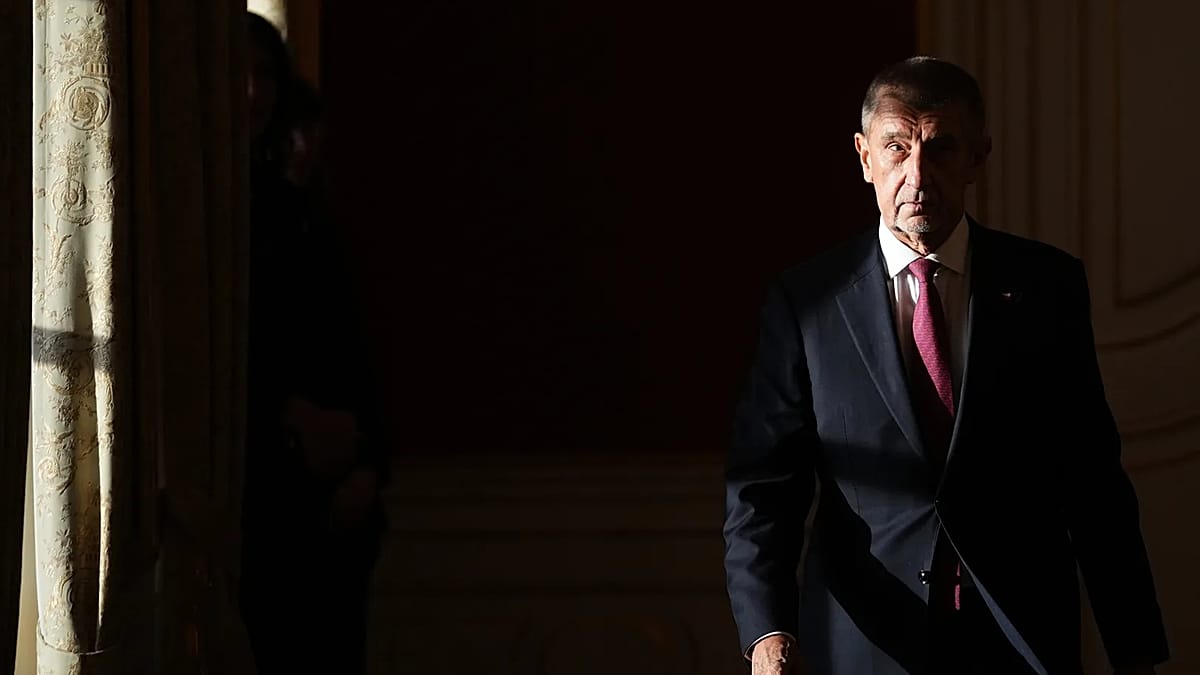
Andrej Babiš was sworn in as the Czech Republic’s new prime minister on Tuesday following parliamentary elections in October.
The billionaire, who served as prime minister from 2017 to 2021, promised Czechs that he would fight for Czech interests “at home and everywhere in the world” and work to make the Czech Republic “the best place to live on earth.”
President Petr Pavel had asked Babiš to form a government after his right-wing party ANO (YES) won a landslide victory in the October vote.
Babiš has agreed to form a majority coalition government with two small political groups: the anti-immigration Free Direct Democracy Party and the right-wing motorists’ association.
The two parties agreed to form a 16-member cabinet, with ANO holding eight posts, including the prime minister’s office.
The Automobile Party will have four members and the Liberal Party will have three members. Pavel will appoint his entire cabinet on Monday, his office said.
The new alliance will give 108 seats in the 200-member lower house, pushing the four centre-right parties of former Prime Minister Petr Fiala’s pro-Western government into opposition.
The new coalition could follow Hungary and Slovakia and draw the Czech Republic away from Russia’s support for Ukraine in its nearly four-year war.
The Czech government under Fiala provided significant humanitarian and military aid to Ukraine and took in approximately 500,000 Ukrainian refugees.
Coalition members are also critical of the EU, particularly rejecting its policies on the environment and immigration.
Hungarian Prime Minister Viktor Orbán, widely considered Russian President Vladimir Putin’s closest partner among EU leaders, said of Babiš: “An old ally is back.”
After Babiš lost the 2021 parliamentary elections, he lost to Pavel, a retired army general, in a largely ceremonial vote for the presidential post.
Mr. Babiš, 71, was appointed prime minister after meeting the conditions laid out by Mr. Pavel and publicly announcing that he would sell major businesses to avoid conflicts of interest arising from private dealings and political roles.
Babiš owns about 200 companies under the Agrofelt conglomerate. He said an independent trustee would oversee Agrofert in a trust fund, but that Agrofert would remain under the control of an independent guardian until his death. His descendants will inherit it.
Babiš also owns a network of clinics and laboratories, and a close ally of the ANO is a candidate for health minister.
Additional sources of information • AP