
France and Italy are asking the European Commission to exempt fertilizers from the region’s carbon border tax, which requires EU importers to pay for pollution caused by products entering the EU, according to two documents seen by Euronews.
French and Italian officials are concerned that their agricultural sectors will be exposed to a “significant increase” in the price of fertilizer imported into the EU, with France estimating that the new tax would increase prices by around 25%.
“Such a postponement would ease tensions in the crop agriculture sector and give economic operators time to restore satisfactory fertilizer supply conditions for the 2026 crop year,” said the letter sent by the French, seen by Euronews.
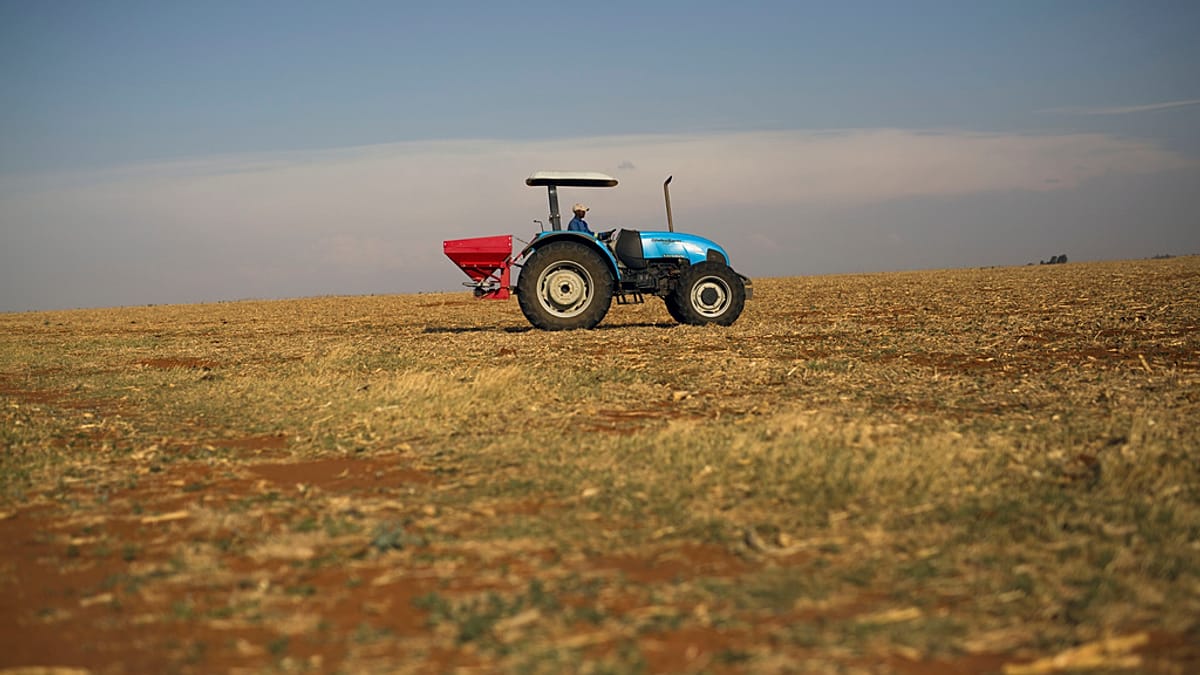
Fertilizers are essential in agriculture to replenish soil nutrients such as nitrogen to increase crop yields and ensure food security despite environmental challenges.
However, the enormous amount of energy required to produce these chemicals will ultimately be reflected in the EU’s carbon border tax.
The EU’s carbon border tax, Carbon Border Mechanism Adjustment (CBAM), currently targets nitrogen fertilizers such as ammonia, compound fertilizers, mineral fertilizers, and other fertilizers with significant emissions from the production process.
While France supports the overall levy, calling it a “fundamental measure” to strengthen carbon prices and ensure fair competition with third countries, Paris expressed concern that the law would inevitably increase costs for farmers already struggling in the face of low crop prices and rising costs of fertilizer imports from Russia.
Algeria, Belarus, China, Egypt and the United States are some of the most well-known countries selling fertilizer to the EU. Fertilizers from Belarus and Russia were affected by EU tariffs last summer.
Italian Minister Lollobrigida said that even if the Franco-Italian proposals were applied, they would still operate under such a regime.
Further measures to support European farmers
A second letter, signed by the Italian Ministry of Agriculture, asks the European Commission to consider further parallel measures that will benefit farmers “in the meantime.”
The Italian minister said this could be achieved by eliminating tariffs on fertilizers imported from third countries.
“The alarming market situation suggests that the suspension clause regarding the impact of CBAM on fertilizers should be triggered as soon as possible,” Italy’s letter to Agriculture Secretary Christoph Hansen said.
Brussels-based industry association Fertilizers Europe said the entry into force of the financial mechanism under the CBAM would create “high financial uncertainty” for EU fertilizer blenders and importers and prevent them from ordering further fertilizer.
“With 50% of the EU’s fertilizer supply sourced from third countries and current stocks only covering around 60% of next year’s demand, this uncertainty threatens fertilizer trade and the continued availability of fertilizer for European farmers,” Fertilizers Europe said in a statement.
EU agriculture ministers meet in Brussels
EU ministers will meet in Brussels on Wednesday to discuss the possibility of a CBAM exemption, as European governments debate how to approve the controversial Mercosur trade deal with Latin American countries including Brazil. Tariffs would be lowered across the board, while Europe’s single market would be opened up to South American products.
On January 6, the European Commission announced access to €45 billion in funding under the next Common Agricultural Policy Budget as early as 2028 to appease farmers.
France is gathering support from member states to back the proposed fertilizer exemption, two EU officials said.
“We are considering France’s proposal,” one EU diplomat told Euronews.