

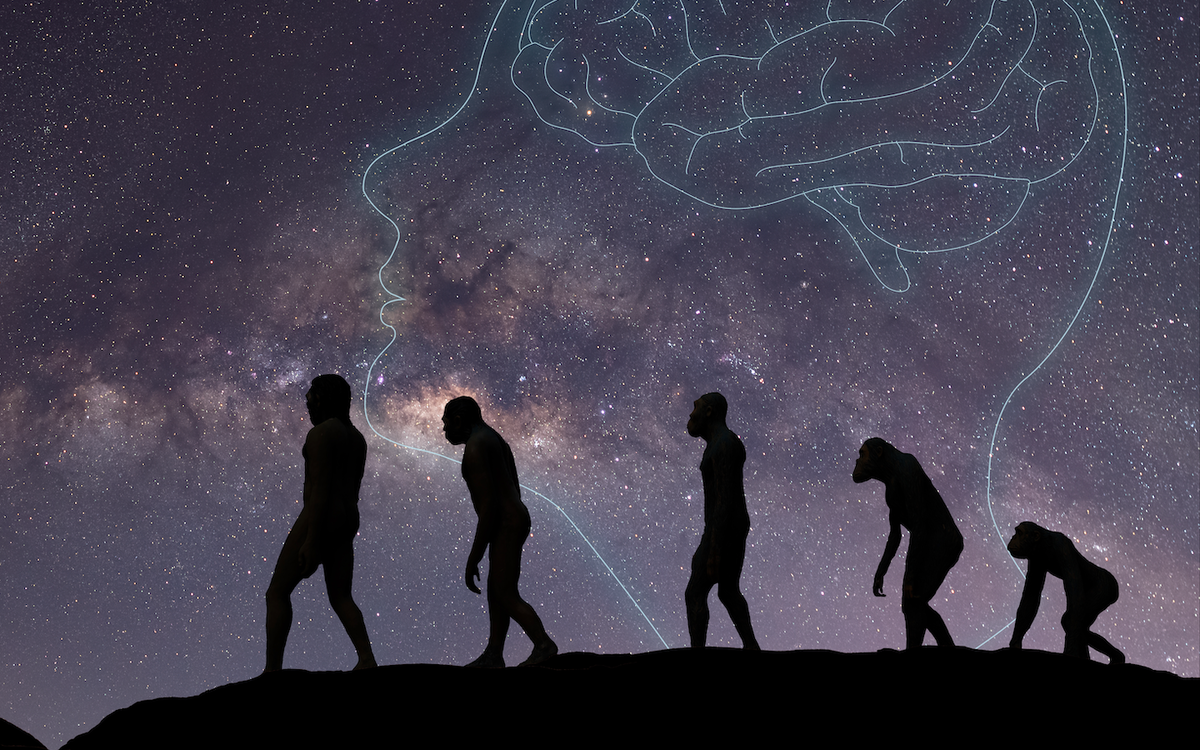
Other forms of intelligence may evolve to occupy the ecological and perhaps technological niches we currently hold. Photo credit: Frank60/shutterstock
The idea of life existing on Earth without humans may seem like science fiction, but it is the subject of serious scientific consideration. Professor Tim Coulson, a biologist at the University of Oxford, highlighted a surprising candidate species as a potential future species. Based on studies of evolution and the history of life, Coulson suggests that even if humans eventually disappear, other forms of intelligence could evolve to occupy the ecological and perhaps technological niches we currently hold. His proposals challenge traditional assumptions about which species will thrive in a post-human world.
an unexpected candidate
Coulson made an unconventional choice: the octopus, an invertebrate already known for its intelligence, adaptability, and problem-solving abilities. in his book our universal historyhe argues that if humans disappeared, species like octopuses could evolve in unexpected ways and potentially exploit the ecological niches left by humans. Although octopuses currently live in marine environments, their sophisticated nervous systems, behavioral flexibility, and ability to manipulate objects suggest that they may develop new forms of intelligence over millions of years.
Why an octopus and not a primate?
While many people may think that our closest living relatives, such as chimpanzees and other primates, are the most likely successors to humans, Coulson questions this assumption. Primates rely on complex social structures and behavioral patterns that may limit their ability to adapt to fundamentally altered ecosystems. In contrast, octopuses exhibit remarkable adaptability, the ability to communicate through color changes, and the ability to independently solve problems, traits that may provide unique evolutionary advantages.
Coulson points to the octopus’ dispersed nervous system, relative brain size, and ability to coordinate independent limbs as indicators of cognitive ability. Their ability to use tools, manipulate their environment, and camouflage themselves demonstrates adaptability and problem-solving abilities not often observed in invertebrates. Although speculative, these features suggest a long-term evolutionary potential that could position octopus descendants as dominant organisms in a fundamentally transformed world.
Challenges and speculative nature
Coulson stresses that this idea remains highly speculative. Evolution is influenced by a myriad of variables, including environmental changes, random mutations, and extinction events. Critics say the octopus’s short lifespan and aquatic limitations pose challenges to any evolution toward land dominance or the development of complex civilization-like societies. Nevertheless, Coulson’s considerations move beyond our anthropocentric view and provoke a broader discussion about species intelligence and adaptability.
Species rise and fall, ecosystems change, and niches open and close over geological time. Coulson’s work encourages us to think about the temporary nature of human dominance and the continuing potential for life to adapt in creative ways. This highlights the importance of studying evolutionary processes and ecological resilience in preparing for long-term environmental change.
Takeaways from Coulson’s research
- Professor Tim Coulson of the University of Oxford suggests that octopuses could be our successors if humans become extinct.
- Coulson argues that primates may be less suited due to behavioral and social constraints.
- The octopus’ problem-solving abilities, color-changing communication, object manipulation, and neural complexity suggest a high evolutionary potential.
- This idea is just a guess. Evolutionary paths over millions of years are unpredictable, and physical limitations such as the lack of a skeleton pose challenges to terrestrial adaptation.
- Coulson’s views aim to encourage reflection on evolution, resilience and the future of life on Earth beyond humanity.
This proposal has sparked public interest in the long-term fate of Earth’s ecosystems and the possibility that intelligence will emerge in a form radically different from ours. By focusing on the octopus, Coulson challenges anthropocentric assumptions about intelligence and challenges both scientists and the public to consider evolution in a broader, imaginative context.
It is also a reminder of the fragility and resilience of life. Although humans currently dominate, our species is ultimately geologically temporary. This discussion focuses on the continued dynamism of evolution and the role that adaptation plays in survival, reminding us that life on Earth will continue in some form even after humanity has disappeared.