

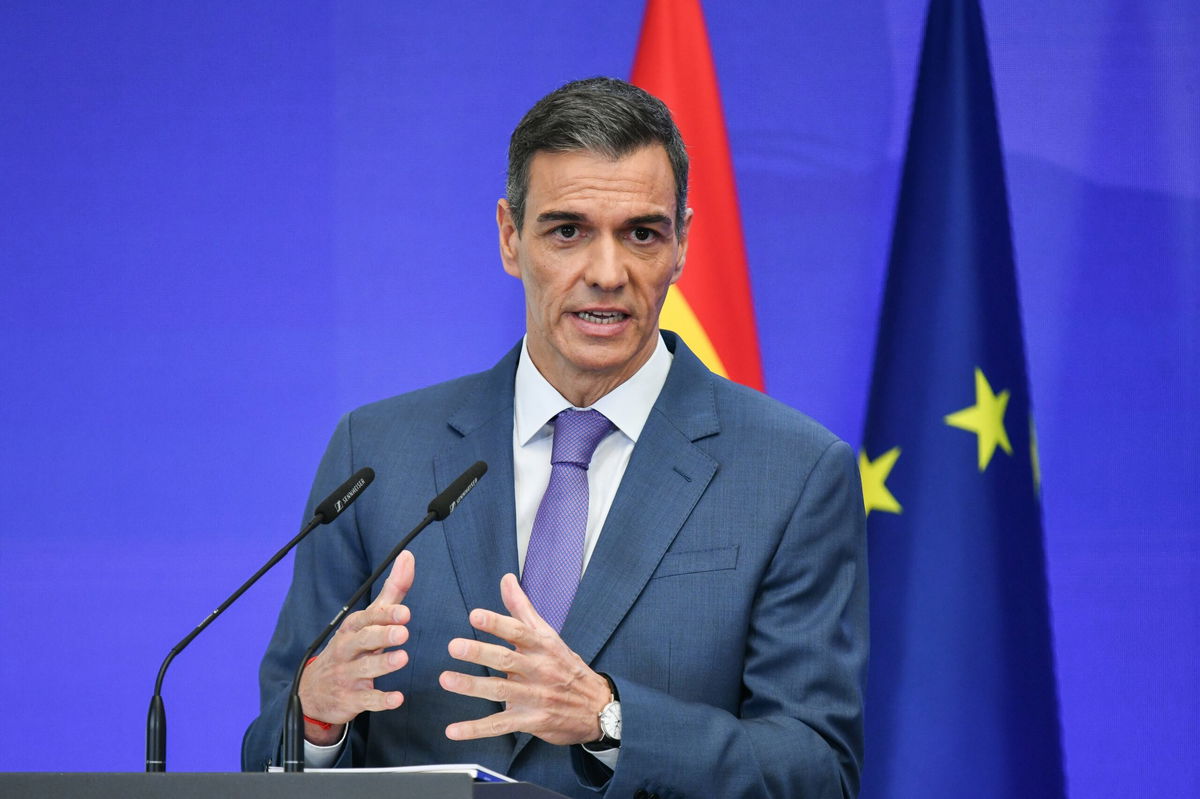
Government officials stressed that the invitation did not constitute an agreement and that Spain had not accepted participation. Photo credit: OSCAR GONZALEZ FUENTES/Shutterstock
Spanish Prime Minister Pedro Sánchez has been invited by US President Donald Trump to join a proposed international “peace commission” aimed at overseeing the post-war reconstruction of Gaza. The invitation, first reported by Spanish media and confirmed by government sources, is currently under consideration by Spanish government authorities and no decision has yet been made.
Sources in La Moncloa said Mr. Sánchez has received formal approaches related to President Trump’s foreign policy proposals, including the creation of a body tentatively called a “peace plan” or Gaza Governing Council. The initiative aims to manage reconstruction efforts and post-war stability, but no formal structure, mandate or international framework has been announced.
Uncertainty over role and international legitimacy
Moncloa makes no promises.
Spanish government officials stressed that the invitation did not constitute an agreement and that Spain was not accepting participation. Officials said the proposal was being analyzed diplomatically, particularly with regard to its compatibility with international law, the United Nations framework and Spain’s existing position on the Middle East conflict.
The Government reiterated its long-standing support for the two-state solution and UN-led multilateral mechanisms. Officials note that any engagement in post-war Gaza will need to be consistent with these principles and European Union policy.
No details were given about how the proposed peace commission would work, who else would be invited to join, or whether international organizations would be involved.
Political reaction within Spain
Coalition partners express opposition
The invitation has already caused political tension within Spain’s coalition government. Several parties allied with Mr. Sánchez have publicly rejected the idea of Spain joining organizations linked to Mr. Trump’s initiative, warning that it could undermine international norms and sideline existing multilateral institutions.
Representatives of left-wing parties in the coalition government have criticized the proposal, saying it is inconsistent with the United Nations system and Spain’s foreign policy commitments. They argue that Gaza’s reconstruction and governance should be led through recognized international frameworks, rather than ad hoc political efforts.
Opposition parties, meanwhile, questioned the lack of transparency surrounding the proposal and called on the government to provide transparency about diplomatic contacts related to the initiative.
President Trump’s proposal and broader context
Part of a broader foreign policy position
Donald Trump has made rebuilding and future governing the Gaza Strip part of a broader foreign policy message, framing a proposed peace commission as a mechanism to stabilize the post-conflict territory. However, no official documents or international support for such organizations have been announced.
President Trump has not outlined how the council will interact with existing international actors, including the Palestinian Authority, Israel, the United Nations, and regional powers.
Analysts say the proposal appears to be more political than institutional at this stage, and legal and diplomatic hurdles remain to establishing such a body.
Spain’s position in Gaza
Humanitarian aid and commitment to multilateral solutions
Spain is one of the European countries most strongly calling for a ceasefire and increased humanitarian access to Gaza. The Sánchez administration has consistently maintained that any recovery efforts must be accompanied by political progress toward a two-state solution.
Madrid has also supported international conferences and diplomatic efforts led by prominent institutions such as the United Nations and the European Union, and has contributed to humanitarian aid through established international channels.
Officials stress that Spain’s involvement in Gaza-related initiatives continues to be guided by international law and multilateral cooperation.
Future diplomatic alert
no decision was made
The Spanish government insists that no commitments have been made at this stage and that the invitation remains under consideration. Officials stress that potential participation requires broad international legitimacy and domestic political consensus.
As debate continues over Gaza’s post-war future, the issue is expected to continue to be a topic of debate both in Spain and across Europe. For now, Madrid insists that humanitarian relief, international cooperation and a political solution based on existing global frameworks are its priorities.
Important points
- Pedro Sanchez invited to join Donald Trump’s proposed Gaza peace commission
- The Spanish government has not accepted the invitation and says it is considering the invitation.
- Coalition partners have publicly opposed participation.
- No formal structure or international mission announced
- Spain reiterates support for UN-led multilateral solutions
Spain’s response reflects widespread uncertainty among European governments about how post-war Gaza should be governed and rebuilt. While there is growing international interest in stabilization efforts, most countries continue to emphasize the need for legally recognized mechanisms.
As diplomatic discussions develop, the Sánchez government faces the challenge of balancing international engagement with domestic political pressures and a stated commitment to multilateralism, leaving the invitation unresolved for now.