
Creator( )euronews farsi
Release date
•updated
Telecommunications outages have been occurring in Iran since January 7th. All telephone lines in the country and the internet to the outside world have been cut off by the theocratic government.
The complete communications ban coincided with a violent crackdown on anti-government protesters in Iran’s major cities, including the capital Tehran.
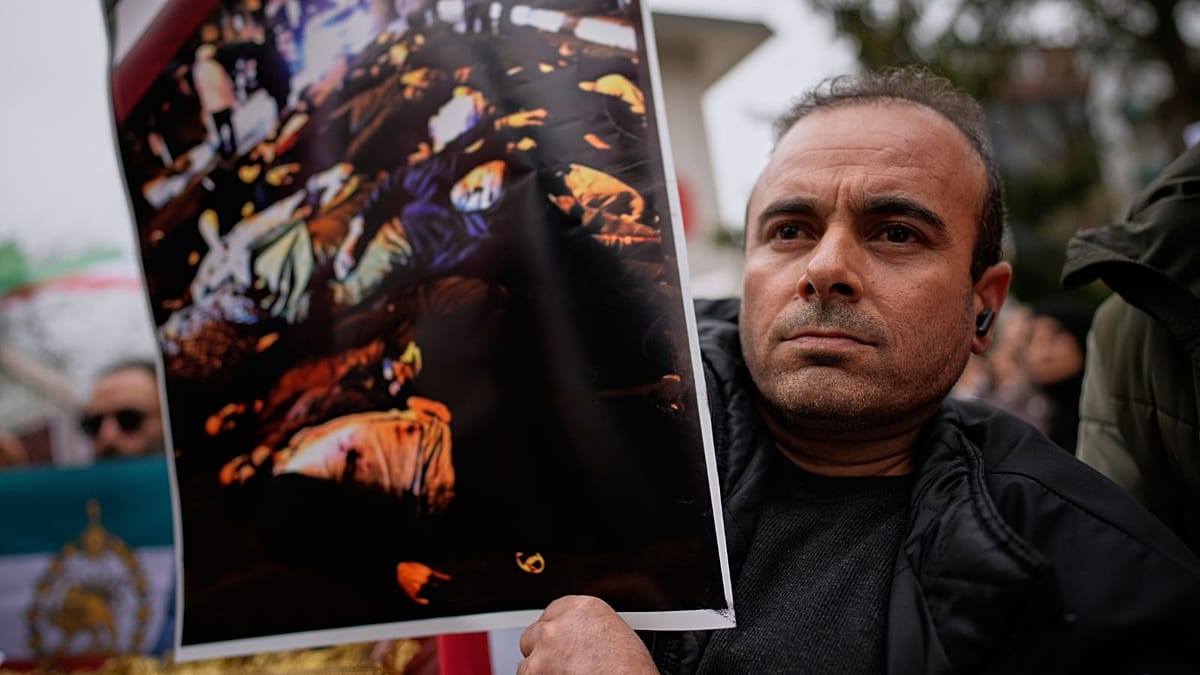
In the days after the power outage, repeated phone calls were made from Iran and footage of the harrowing scenes showing numerous bodies from clashes with security forces was sent across the border.
Some media outlets and human rights groups estimate the number of people killed in the protests at more than 12,000. The government rejects these figures, saying they are vastly inflated to “dramatize” the situation and achieve political objectives.
Iran’s supreme leader Ayatollah Khamenei also acknowledged in a speech on Saturday that thousands of people had been killed during the protests. News agencies, citing Iranian officials, said the number was at least 5,000.
Iranians living abroad watched the news with concern, but after several days of complete isolation, they were able to briefly reunite with their families back home.
Arham (not her real name), who lives in a European country, said in an interview with Euronews that her sister’s husband was the target of direct fire by security forces, even though he did not take part in the protests. As he was closing the store with his children in tow, he was attacked by tear gas canisters.
Arham said the bullet hit his sister’s spouse in the forehead and chest and he was taken to the hospital for surgery. He hasn’t been discharged yet.
“During the protests, a close friend of mine who was participating in the protests in the Narmak area was shot, but he was never heard from and searches by his family were in vain,” Arham said.
“Everyone is sad. As soon as you meet someone, your eyes fill with tears, and the situation is getting worse. People seem to be living normally, but it’s as if we’re being attacked by zombies,” he said in an audio memo recording a phone conversation with his sister, provided to Euronews.
Arham said that on the day she was admitted to the hospital to monitor the condition of her sister’s spouse (the name of the hospital has been withheld), “three teenage girls, aged 16 to 17, were shot and killed right in front of me.”
“It’s all over” is a phrase that keeps repeating during every short and arduous phone call home.
The Islamic Republic of Iran is demanding a huge sum of money from the family to hand over the body for burial. Arham said she and many others are raising money to help her neighbors in Tehran pay for the return of her daughter’s remains.
The protests began on December 9, when market workers in Tehran went on strike and closed shops to protest Iran’s difficult economic conditions, as the country’s currency, the rial, plummeted to record lows and inflation remained above 40%.
It soon spread to other cities in the form of anti-government protests.
In his speech, Khamenei labeled the protesters “agitators” and called for an immediate crackdown to disperse them.
Images released by Iran show morgues such as Qarizak filled with the bodies of people killed in the protests, demonstrating the severity of the military used to suppress the uprising.
Among those killed were many teenagers between the ages of 15 and 16. The crackdown has drawn backlash from human rights groups and many countries around the world, with Australia even closing its embassy in Iran in protest.
Tehran said terrorists blended into the crowd of protesters and were responsible for the killings. Iraqi officials interviewed by US broadcaster CNN said that about 5,000 members of groups affiliated with the Iranian-backed militant group Hashd al-Shaabi helped quell the riot.
Many of them reportedly arrived in Iran by bus disguised as pilgrims.