
The US has reportedly moved some personnel from major military bases. Photo credit: miss.cabul/Shutterstock
Iran has issued a strong warning to countries in the Middle East that U.S. military action against Tehran could lead to attacks on U.S. military bases in the region. The governments of Saudi Arabia, the United Arab Emirates, Qatar and Türkiye reportedly received the message directly from Iranian officials.
Iranian Defense Minister Brigadier General Aziz Nafizalde has warned that if the US launches an attack on Iranian territory, the country will target US military bases in the region. He also said foreign military facilities supporting such U.S. operations would be considered legitimate targets.
President Nafizalde said Iran’s potential response would be serious and damaging to any aggressor, stressing Iran’s readiness to defend its sovereignty. The statement is one of the clearest signals yet of Iran’s readiness to respond militarily to a perceived threat from the United States.
The warning was also passed on to neighboring governments that host US troops, including Saudi Arabia, the United Arab Emirates, Qatar and Turkey, underscoring the potential regional impact of a US attack.
US adjusts military posture
Movement of people and precautions
In response to the growing rhetoric, the United States redeployed certain personnel from major bases across the Gulf as a precautionary measure. Among the affected facilities is Al Udeid Air Base in Qatar, a central hub for U.S. operations in the Middle East and home to both logistics and combat support forces.
Although no full-scale evacuation order has been issued, the latest measures show heightened vigilance for the safety of the U.S. military. Commanders are reportedly reviewing operational procedures to reduce potential vulnerabilities and ensure troops can respond effectively if a threat occurs.
Analysts suggest such precautions, while standard during times of heightened tensions, show Washington is taking Tehran’s warnings seriously. They also point out that similar troop deployment adjustments have taken place in the past during times of regional instability, particularly in the Gulf region.
Domestic unrest intensifies
Protests and government response
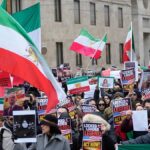
The threat coincides with widespread unrest within Iran. Large-scale demonstrations have broken out in major cities, reflecting people’s deep dissatisfaction with political repression, economic hardship, and social restrictions. The government response was reportedly strong, resulting in numerous casualties and thousands of arrests.
Authorities have characterized the unrest as being exacerbated by foreign interference, depicting outside forces seeking to exploit domestic discontent for political gain. This story has been used to justify the Iranian government’s increased military posture and warnings to the U.S. military. Officials argue that protecting national security requires preparing to respond to perceived internal and external threats.
The protests themselves highlight broader challenges facing Iran, including long-standing economic grievances, dissatisfaction with governance and generational tensions. Analysts say domestic instability could complicate foreign policy decisions and contribute to regional uncertainty.
Regional and international impact
Diplomatic pressure and strategic balance
Countries that host U.S. troops face a delicate balance between upholding their alliance with the United States and avoiding involvement in potential conflict. Analysts have suggested that an escalation could have far-reaching implications, including disrupting regional security and energy supply routes, particularly through the Strait of Hormuz.
Diplomatic efforts remain cautious. International leaders called for restraint and urged both Iran and the United States to pursue dialogue and avoid military conflict. Officials say the lack of concrete progress in negotiations leaves the situation fragile and that both sides are closely monitoring the other’s developments and public statements.
Regional power relations are further complicated by the presence of multiple international stakeholders, each with their own strategic interests. Because of the complex web of alliances, rivalries, and historical tensions, even a small incident can quickly escalate if miscalculated.
Conflict overview
- Iran has warned that US military bases in the Middle East will be targeted if the US launches military action.
- The United States redeployed personnel from strategic facilities as a precaution.
- Protests continue in Iran, reflecting deep-rooted social and political dissatisfaction.
- The Iranian government claims foreign powers are exploiting the chaos to destabilize the regime.
- Regional countries that station U.S. forces are trying to navigate a complex security environment.
- Analysts emphasize the interconnectedness of regional security, energy supplies and political alliances.
risk of escalation
Analysts warn of potential for broader conflict
Experts have highlighted the risk of broader regional instability in the event of direct conflict. A military escalation could affect not only Iran and the Gulf states, but also international trade, energy markets, and regional alliances.
Both Iran and the United States remain engaged in repeated threats and precautionary measures as the turmoil within Iran continues to put pressure on the government. Officials stress that the coming weeks will be critical in determining whether tensions are eased through diplomacy or erupt into open conflict. The interplay of domestic pressures, regional security concerns, and global attention highlights the instability of the current situation.