
As of December 2025, new law A law has come into force that makes Hainan an independent customs territory and strengthens the favorable regulatory environment in China’s southernmost province.
This move stands in contrast to the current global trend of protectionism, with many countries moving to tighten trade rules and investment regulations.
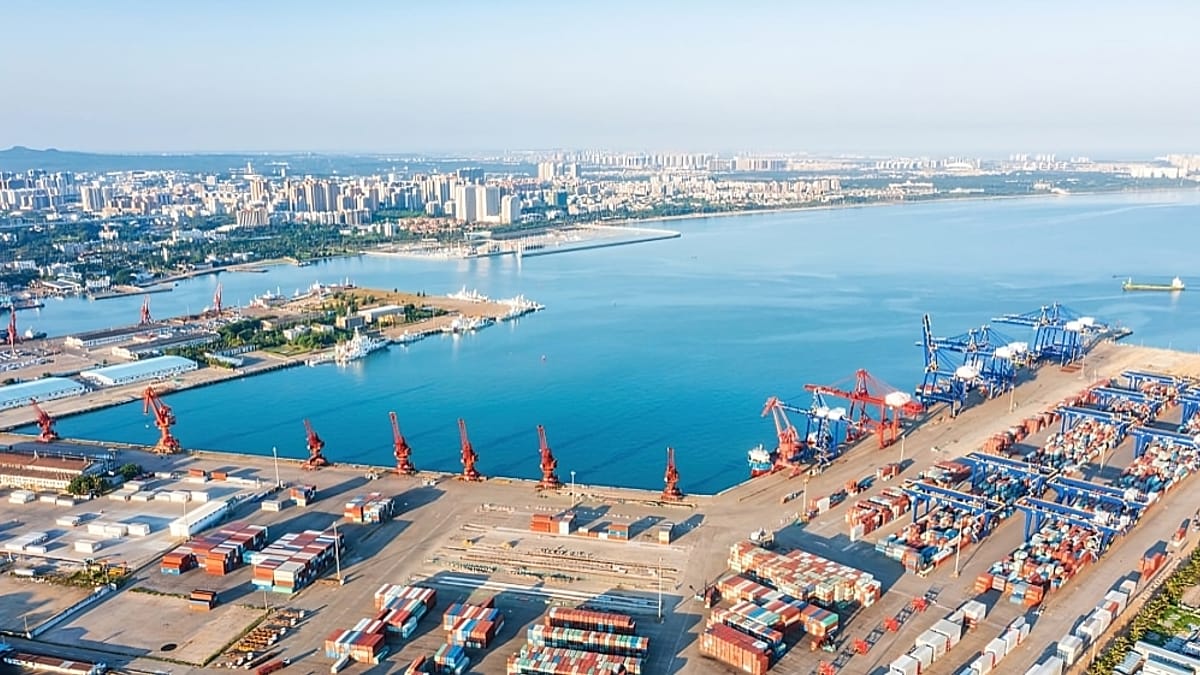
Hainan Island is now virtually the world’s largest free trade port in terms of area. With an area of over 35,000 square kilometers, it is approximately 50 times the size of Singapore and slightly larger than Belgium.
What China is trying to offer is solution It seeks to address “increasing uncertainty in the global economy” and replicate the success of Singapore, which has a free trade port the size of a European nation.
According to the official Xinhua news agency, the launch of the “special customs operations” is not just a policy adjustment, but a fundamental restructuring of the way the island province interacts with international markets.
A unique framework established by the Chinese Communist Party could make Hainan the world’s most business-friendly jurisdiction.
This is not the first time that state-led economies, known as socialist market economies, have taken a page from capitalist playbook in order to increase their global dominance.
Special economic zones (SEZs) have been successfully introduced in China since the late 1970s as part of its economic opening policy. These SEZs allow the Chinese government to experiment with capitalist mechanisms in limited areas while maintaining broad state control over the economy.
In 2020, the Chinese Communist Party announced a comprehensive plan to transform Hainan Island from a special economic zone to a strategic hub on par with Hong Kong, Singapore, and Dubai.
The goal was to create a fully independent trade and investment system in the province by the end of 2025. Looking ahead, the party expects Hainan to reach “institutional maturity” by 2035 and gain “strong global influence” by mid-century.
1st line is open, 2nd line is control
The province is made up of Hainan Island and various small islands in the South China Sea, and currently operates under a “two-line” customs system designed to increase openness while maintaining internal security.
The first line marks Hainan’s border with the global economy, and most trade barriers have been removed. Under the new law, the list of duty-free imports, including raw materials, equipment and consumer products, will be significantly expanded, allowing most goods to enter the state freely.
The second line acts as a filter between Hainan Island and mainland China. Standard customs rules apply there, and goods are subject to tariffs and regulations aimed at protecting the domestic market.
However, this system creates strong incentives for manufacturers. Goods entering Hainan that achieve at least 30% value added within Hainan can be brought into mainland China duty-free, a policy aimed at encouraging additional production on the island rather than simply using Hainan as a transit hub.
For example, Australian beef can be imported into Hainan Island duty-free. The beef can then be sliced and packaged in the island province itself for hot pot products destined for China, and then distributed to mainland Chinese supermarkets with a similar exemption.
China’s strategic gateway
The scope of the Chinese Communist Party’s Hainan plan goes far beyond a customs agreement.
The province applies a flat corporate tax rate of 15%, which is lower than Hong Kong (16.5%), Singapore (17%) and mainland China (25%).
Hainan currently operates under its own regulatory framework in several other areas as well, which differs significantly from mainland regulations.
For example, if a drug or medical device has been approved by one of the many regulatory authorities around the world, it can be used in an island state even though it is banned on the mainland.
Similarly, companies registered in Hainan can apply for broader internet access, allowing them to circumvent the so-called “Great Firewall of China,” a system of laws and technologies put in place by the Chinese Communist Party to control online activity across the country.
Foreign companies can also open special bank accounts in Hainan and capital transfers are exempt from mainland foreign exchange regulations, while foreign universities are allowed to set up campuses without a Chinese partner.
Visa-free entry to the state has also expanded from 59 countries to 86, and now includes the United States, Germany, Australia, and several countries in the Middle East and South America.
Authorities also promote the island as a major tourist destination, allowing visitors to stay for up to 30 days without a visa for business, medical or tourist purposes.
Amid rising global economic tensions, Hainan is acting as a “pressure valve” for China, offering a low-tax, zero-tariff, high-access gateway to Asia-Pacific markets.