

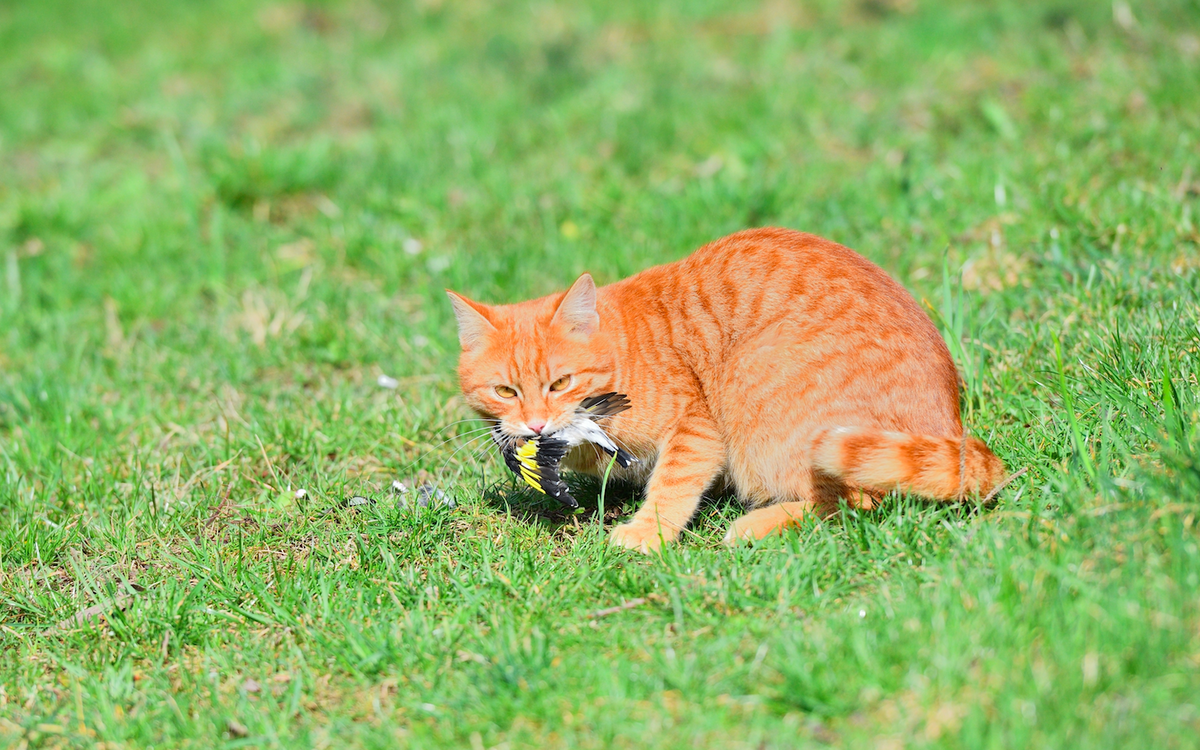
One analysis recorded more than 550 verified predation incidents extracted from images and videos posted by cat owners, many of which were filmed in gardens, streets, and city parks. Photo credit: Klimek Pavol/Shutterstock
Domestic cats are among the most popular pets around the world, but growing scientific evidence shows that cats allowed to roam outdoors pose a serious and often underestimated threat to wildlife. Images and videos shared on social media platforms like TikTok, Instagram, and YouTube are helping researchers document this impact in unprecedented detail, especially in urban environments where traditional wildlife monitoring is limited.
By analyzing thousands of publicly shared posts, scientists identified distinct patterns of predation by domestic cats, capturing hunting behavior that would otherwise go unrecorded. These findings confirm that even when cats are well-fed, they continue to hunt based on instinct rather than hunger, and that their influence extends far beyond birds to reptiles, amphibians, and invertebrates.
Social media as an unexpected research tool
New insights from online content
A recent peer-reviewed study using social media images found that domestic cats prey on a wide range of species, including insects, lizards, frogs, and small mammals. One analysis recorded more than 550 verified predation incidents extracted from images and videos posted by cat owners, many of which were filmed in gardens, streets, and city parks.
The researchers say the method complements traditional fieldwork by capturing interactions that are rarely recorded, particularly invertebrate predation. The findings suggest that the ecological footprint of domestic cats in cities is significantly underestimated.
global wildlife problem
Scale of predation and extinction
Globally, domestic cats are recognized as one of the most harmful invasive predators. A comprehensive scientific review published in nature communications Cats prey on more than 2,000 species around the world, of which at least 347 are classified as endangered or near-threatened under international conservation standards.
Importantly, conservation groups estimate that free-ranging domestic and feral cats directly contribute to the extinction of at least 63 species of vertebrates, including birds, mammals, and reptiles. These extinctions are not theoretical or historical abstractions. They are well documented, and cats have been identified as the main or important factor in species declines recorded by the International Union for Conservation of Nature.
This impact is most severe on islands where native wildlife evolved without mammalian predators. In such ecosystems, cats can quickly destroy populations lacking defensive behaviors, pushing an already vulnerable species beyond recovery.
Urban areas are not unaffected either.
Cities as active hunting grounds
While it was once thought that urban environments limited cats’ ecological impact, research is increasingly showing the opposite. High densities of domestic cats in towns and cities mean that even modest individual hunting rates can lead to substantial cumulative losses of wildlife.
Studies in urban and suburban areas have documented cats killing birds, bats, reptiles, and small mammals, including species already under pressure from habitat loss, pollution, and climate change. Social media footage supports these findings, showing hunting behavior in densely populated areas where wildlife shelters are lacking.
Spain-specific vulnerabilities
Endemic species under pressure
In Spain, there is growing conservation concern about the impact of domestic cats, especially in areas with rich biodiversity. Scientists have stressed that the Canary Islands are particularly vulnerable due to the large number of endemic species, many of which are found nowhere else in the world and have no natural defenses against introduced predators such as cats.
Research has documented free-roaming cats within protected areas, including Natura 2000 sites, where they overlap with populations of endangered birds and reptiles. Conservationists warn that current laws do not always clearly distinguish between domestic, feral and feral cats, complicating effective management and wildlife protection efforts.
Summary of scientific discoveries
- Domestic cats prey on more than 2,000 species of wild animals around the world, including at least 347 endangered species.
- Free-ranging cats are contributing to the extinction of at least 63 vertebrate species worldwide
- Social media analysis reveals hundreds of previously undocumented predation incidents, particularly those involving insects and reptiles
- Urban areas act as hotspots due to high cat densities and already stressed wildlife populations.
- In Spain, areas such as the Canary Islands are at increased risk due to endemic species and the presence of cats in protected areas
- Scientists agree that keeping cats indoors is the most effective way to reduce harm to wildlife.
Growing debate on nature conservation
Domestic cats remain valuable companions, but scientific evidence is increasingly showing that allowing them to roam free comes at a significant cost to the ecosystem. Social media has inadvertently become a powerful research tool, revealing interactions that were previously invisible to scientists and policy makers.
Balancing responsible pet ownership and wildlife conservation will become an increasingly urgent challenge in Spain and around the world as urbanization increases and biodiversity declines, researchers warn.