

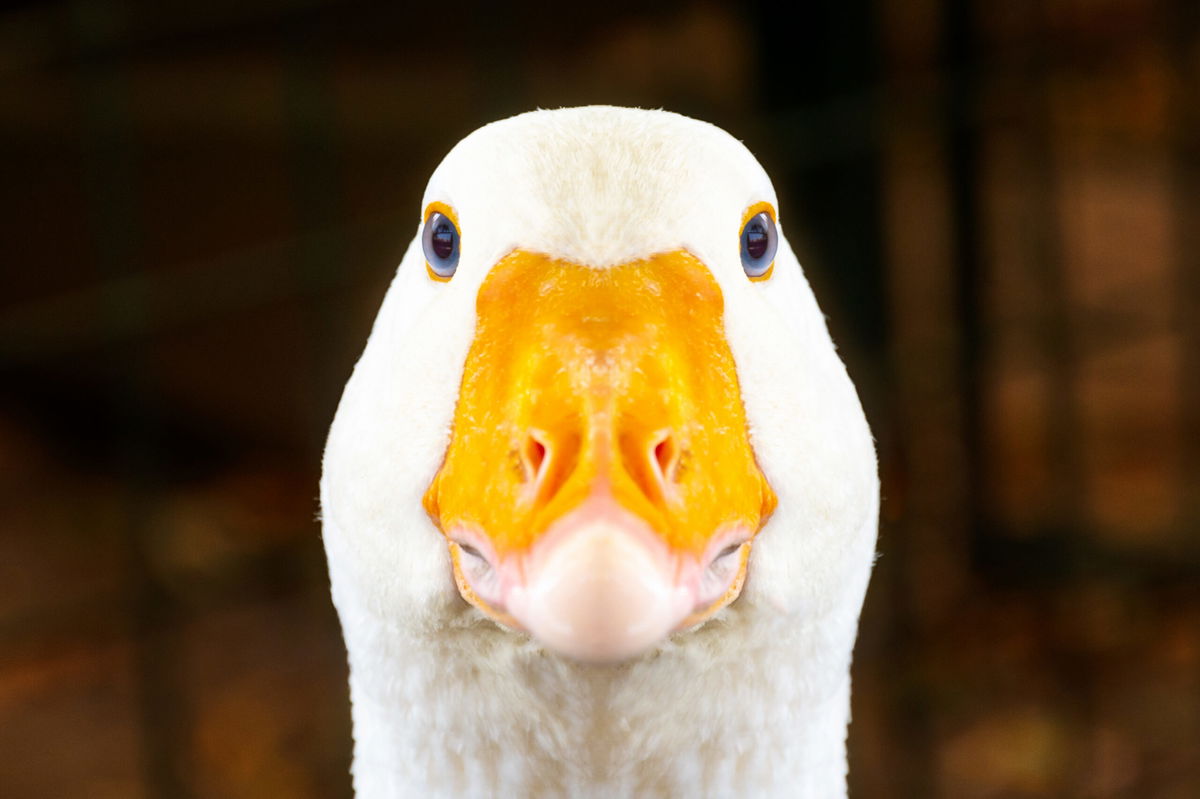
A lead goose known as Piu Piu has been observed reacting when called by police. Photo credit: Karel Pesorna/Shutterstock
At San Pedro de Alcantara Prison in southern Brazil’s Santa Catarina state, authorities are taking an unconventional approach to border security by using geese to guard the facility and assist with surveillance. A flock of geese patrols parts of the prison grounds in place of guard dogs, supplementing electronic systems and human monitoring.
Prison Director Marcos Roberto de Sousa said the animals are a valuable part of the facility’s multi-layered security strategy. The geese are housed in a green area between the inner fence and the main exterior wall, and their loud calls help draw attention to any unusual activity around them.
These birds, including the lead goose known as the piupi, have been observed making distinctive calls in response to police calls, which officers interpret as a warning to be careful. De Souza explained that their innate wariness and tendency to vocalize in response to unfamiliar sounds makes this role effective.
Cost and practicality cited by officials
Geese are considered affordable and effective security guards
De Souza said raising geese is much cheaper than owning a guard dog, which requires training, medical care and ongoing care. In contrast, geese are relatively low-maintenance and naturally wary of strangers, making them well-suited to the prison’s quiet, rural location.
“We have electronic surveillance, in-person surveillance, and finally, instead of dogs, we have geese surveillance,” he said, emphasizing that birds are one of several layers of security.
Using geese for patrols does not mean the prison has abandoned other security methods. Cameras, regular guard changes, and physical barriers remain in place, and flocks of birds act as an additional warning system rather than the only defense.
How geese move
Technology that complements natural instincts
The geese spend much of their time wandering in the grass between the two fences, but have been recorded returning to the on-site pond to interact with staff. When called out by staff, Piu Piu and other geese respond with a distinctive horn, a behavior that officials say helps gauge the birds’ readiness and alertness.
De Souza pointed out that the quiet environment enhances the effectiveness of the geese, as their calls can be clearly heard throughout the property. He said the presence of birds adds a natural alarm that complements both human and electronic systems without incurring the costs typically associated with guard dogs.
Although this approach to security is unusual, geese are historically known for their ability to raise alarms. Their alert behavior has been documented in other environments, with loud horns acting as a deterrent and early warning system.
Operational context and limitations
Part of a broader security framework
Despite the novelty of geese on patrol, officials stress that they do not rely solely on geese and that the prison continues to invest in standard security infrastructure and staff training. The goose is one component of a multi-layered structure designed to prevent escape and maintain order.
Although there is no indication from authorities that the geese have been involved in actual escape prevention or direct intervention, de Souza and his team argue that the geese are a valuable early warning system that complements cameras, guards and other technology.
Important points
- A prison in San Pedro de Alcantara, Santa Catarina, Brazil, has replaced guard dogs with geese to monitor its surroundings.
- Geese patrol the area between the fences and alert staff to unusual activity by honking their horns.
- Officials say caring for geese is cheaper and easier than owning a guard dog.
- The swarm is part of a multi-layered security system that includes human guards and surveillance cameras.
- Geese are not the only safety measure, but serve as a supplementary early warning system.
Correctional safety innovation
The use of geese in modern prison environments highlights the creative adaptation of animals’ natural behavior in response to safety needs. Although not widely adopted, this practice reflects efforts in corrections to blend cost-effective measures with traditional infrastructure. The Santa Catarina incident has drawn international attention as a new example of how agencies can combine low-tech solutions with existing technology to increase vigilance.
Animal behavior experts point out that geese are loud and highly territorial, making them suitable as alarm systems in quiet environments. Their inclusion in prison security frameworks highlights how unconventional methods can play a role alongside more standard approaches to maintaining safety and preventing escapes.